- Kind
- Monastery
- Tradition
- Theravada
- Town
- Si Wilai
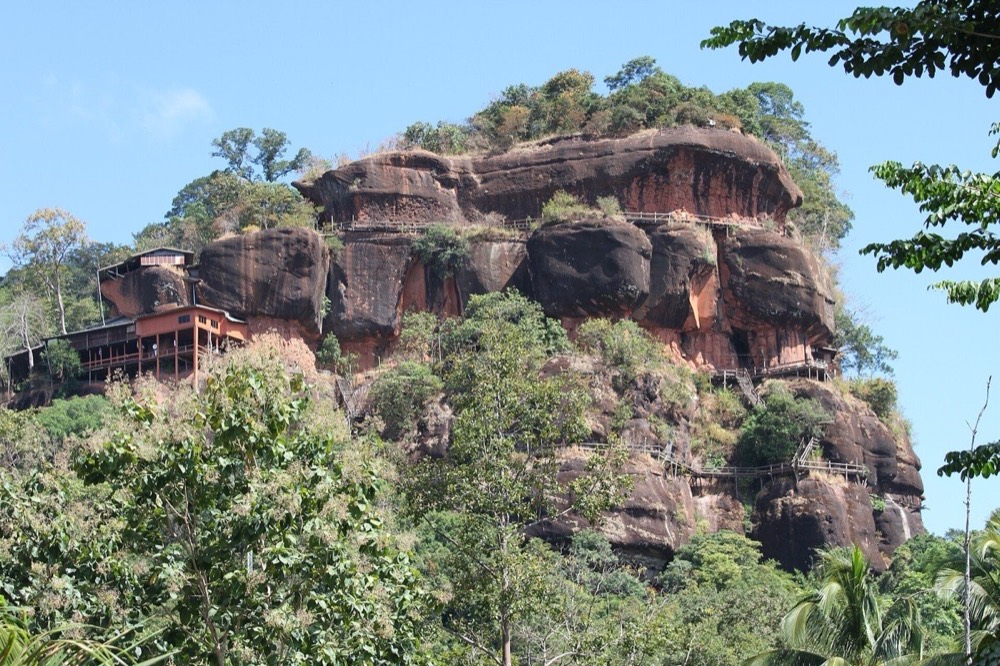
Photo by Erwannjacquin (Wikimedia Commons, CC BY-SA 4.0). The sandstone cliff seen from below
Wat Phu Tok, officially Wat Chetiyakhiri Vihara, sits on Phu Tok Noi, one of two sandstone hills that rise out of the flat forest near Si Wilai in Bueng Kan Province. Phu Tok means isolated mountain in the Isan dialect.
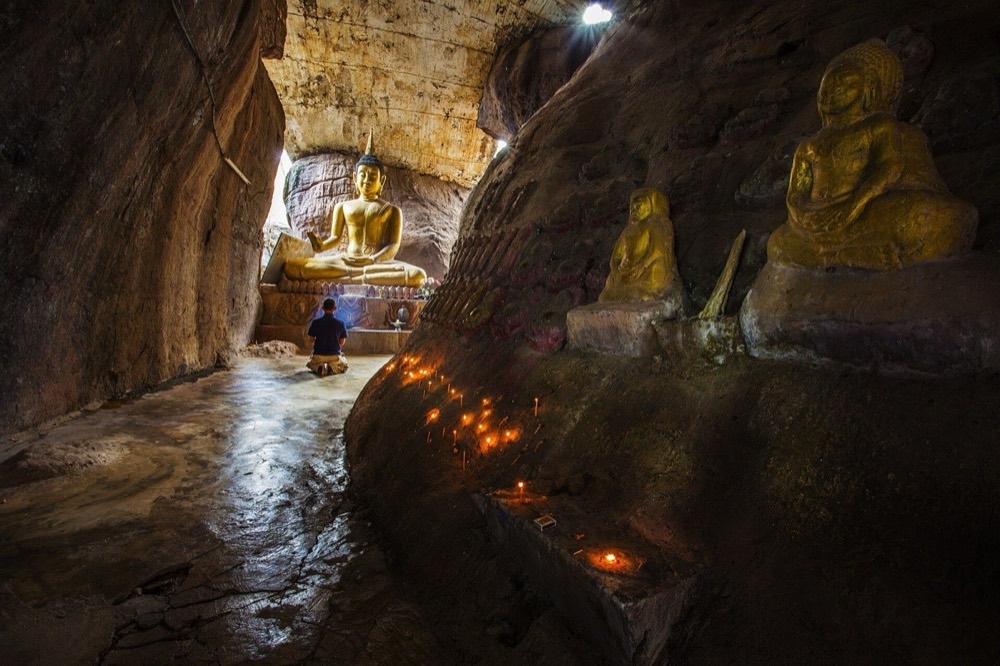
Ajahn Juan Kulajettho, who had trained under Ajahn Mun, settled here in the late 1960s. The Tourism Authority records that the wooden walkways were built over about five years, from 1969, with the labour and faith of monks, novices and villagers. The paths wind up the cliff in seven sections, past caves, shrines and monks’ huts. On the fifth level are the main Buddha hall and living quarters. A large cave near the fifth level shelters statues of senior forest monks, with Ajahn Mun at their head (My Sakon Nakhon). The last stretch, to the forested summit on the seventh level, is a walkway of about 400 metres clinging to the cliff, and the Tourism Authority notes that most visitors stop at the sixth.
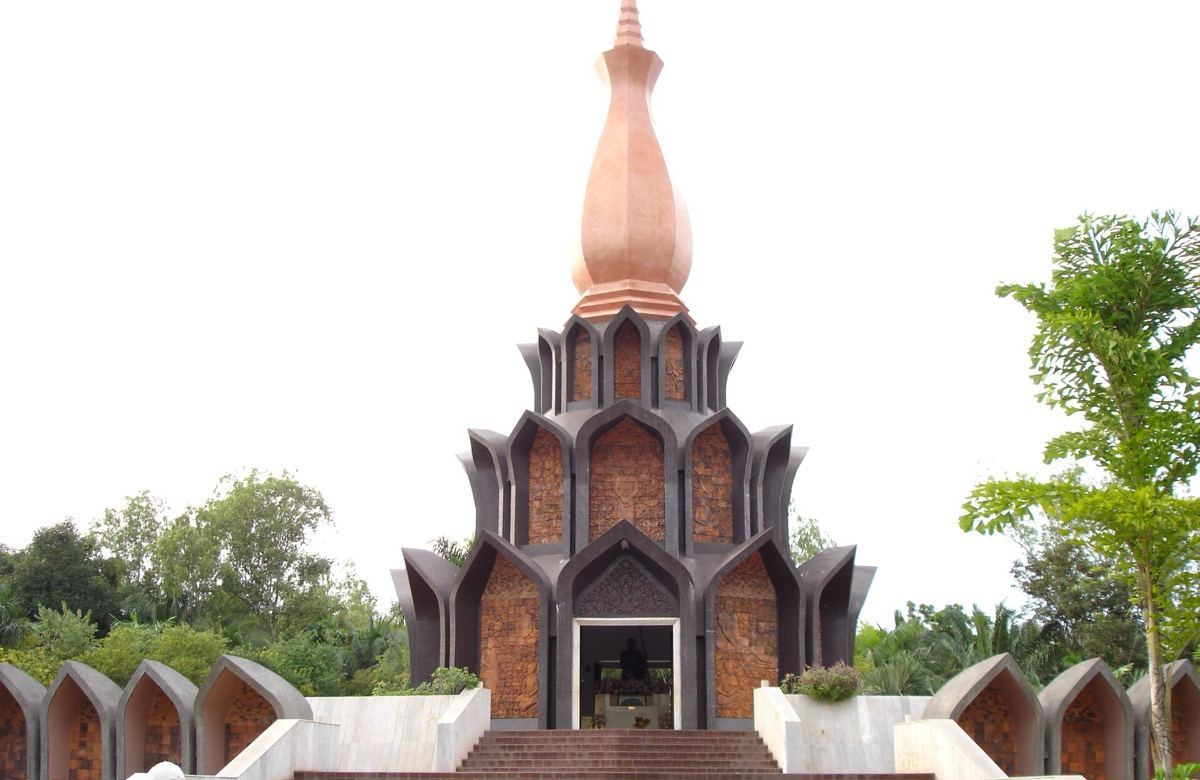
Ajahn Juan died in a plane crash on 27 April 1980, on a journey to Bangkok. A memorial chedi with a museum, not far below the cliff path, commemorates him.
It is a working monastery, and the walkways are steep and exposed. Go early, wear shoes with grip, and treat the climb as the monastery intends it: walk mindfully and keep quiet.
Visiting
A working monastery and a meditation place, not a tourist park. The Tourism Authority asks visitors to be calm and respectful. The climb uses steep wooden stairs and walkways above cliffs, so wear sturdy shoes, go early, and take the western path on the fourth level if heights worry you. The way to the seventh level is a narrow walkway along a high cliff. The Tourism Authority lists the mountain as closed each year from 10 to 16 April.
Teachers
1
Related places
2
Nearby
within 150 km, straight line
Read more
Sources and verification
2
Written from published sources by the volunteer editors. Not yet reviewed by an outside advisor.
- OrganisationTourism Authority of Thailand: Phu Thok (Wat Chetiya Khiri Wihan on Phu Thok Noi; meditation place established by Phra Achan Chuan Kunlachettho; walkway construction began in 1969 and took five years; seven sections; closed 10 to 16 April)
- ReferenceMy Sakon Nakhon: Wat Phu Tok (Ajahn Juan's life, the founding story, the 1980 state of the monastery, statues of forest monks in the fifth-level cave, the memorial chedi and museum, the western path)
Something wrong, missing or out of date? Report a problem. A source we can check makes it quicker to fix.