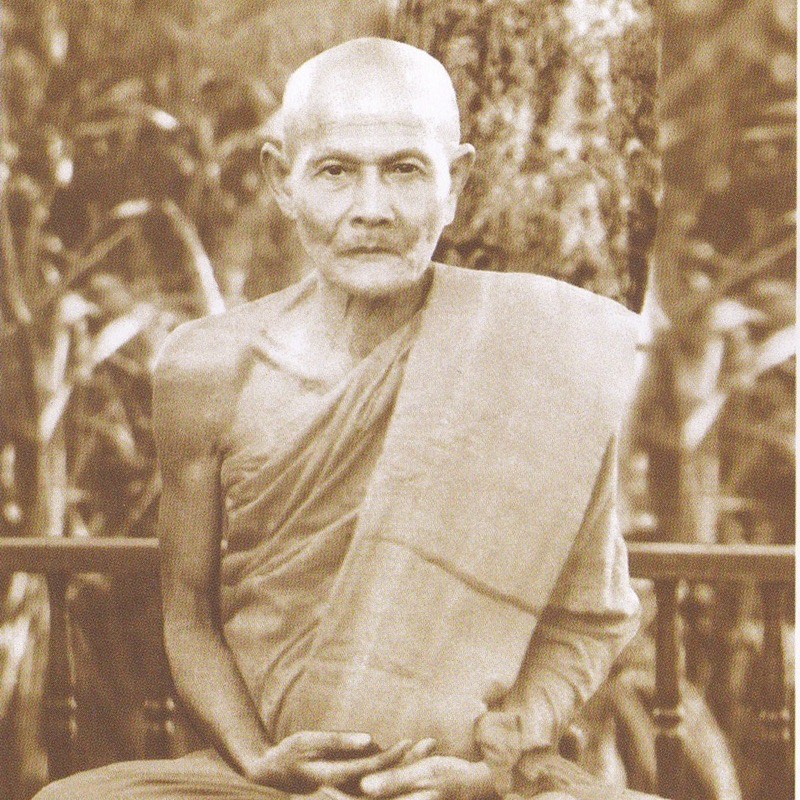
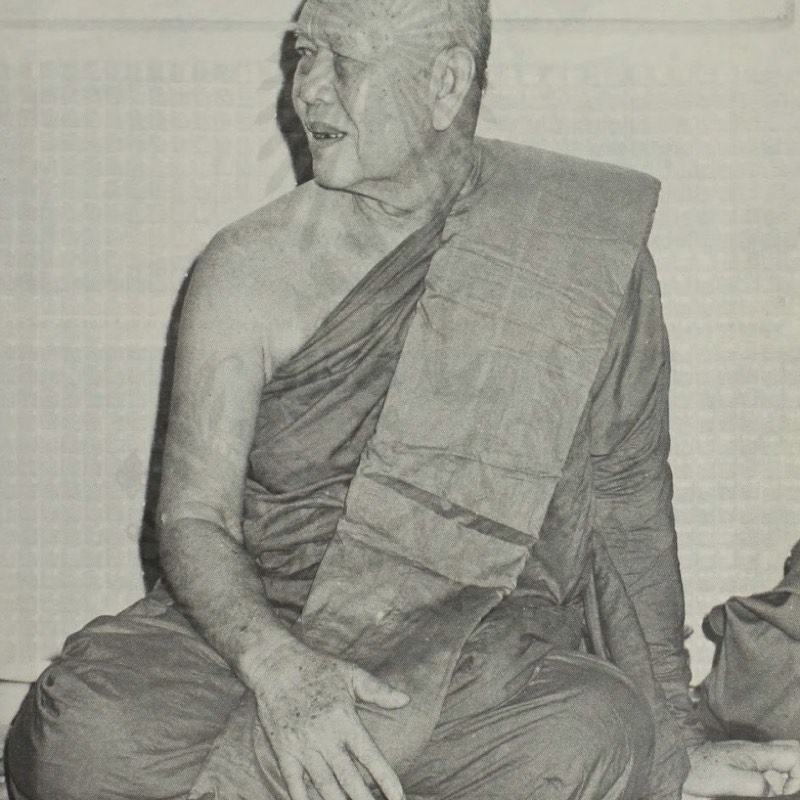
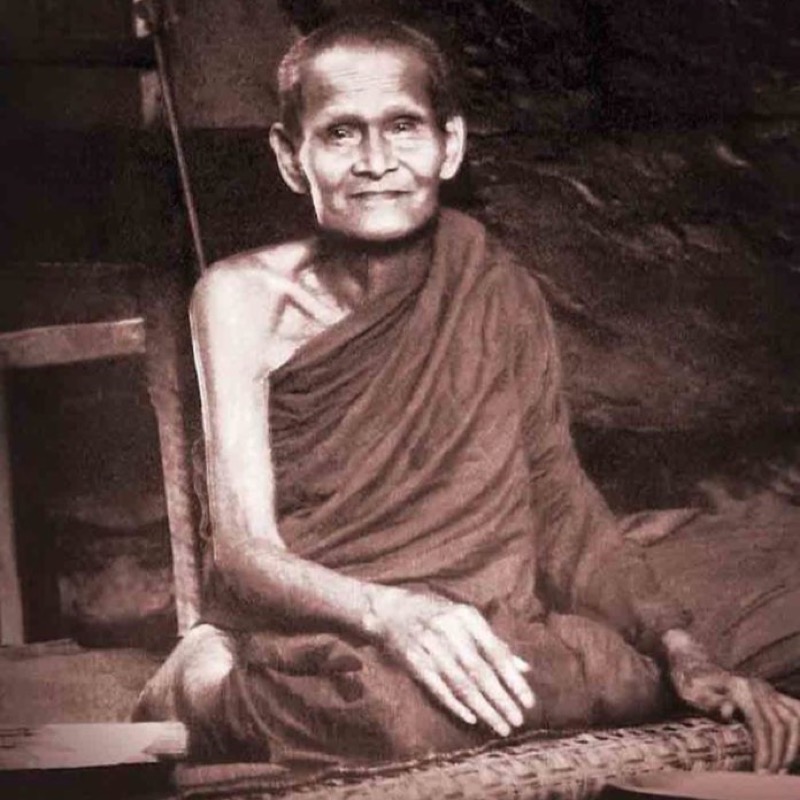
Luang Pu Fan Ajaro (also spelled Fun) came from Phanna Nikhom district in Sakon Nakhon Province; Thai Wikipedia names his village as Ban Muang Khai. It says he first thought of a career in government, then saw the impermanence of rank and chose the monastic life instead. He was ordained as a novice and then as a monk, and on 21 May 1925 joined the Dhammayut order.
Ajahn Maha Bua’s biography of Ajahn Mun says Ajahn Fan first met Ajahn Mun in 1920, when Ajahn Mun came to stay near his home village. Ajahn Mun’s clear teaching inspired him to take up the wandering dhutanga life, and in 1926 he followed Ajahn Mun to Ubon Ratchathani, where he helped to establish several forest monasteries. After many years of wandering he settled in his home district. Ajahn Maha Bua writes of him that the most prominent of his qualities was an immense loving kindness for people of all classes.
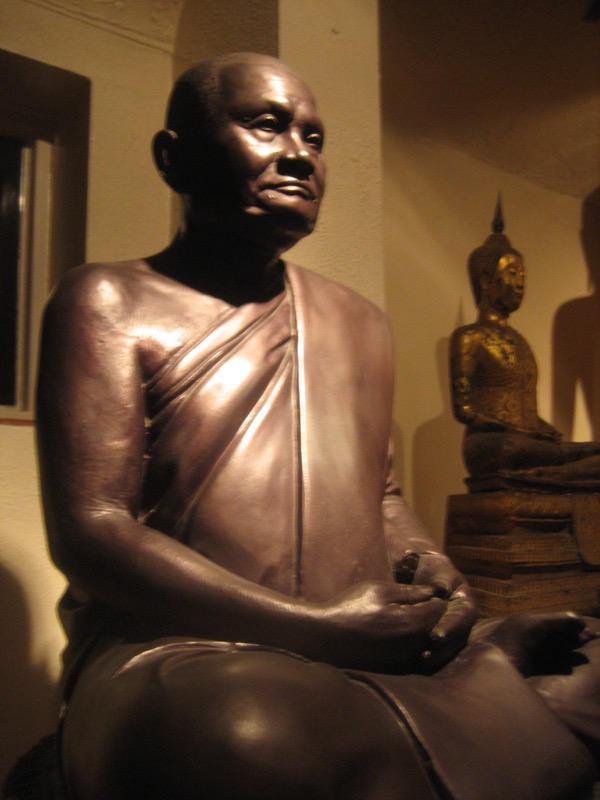
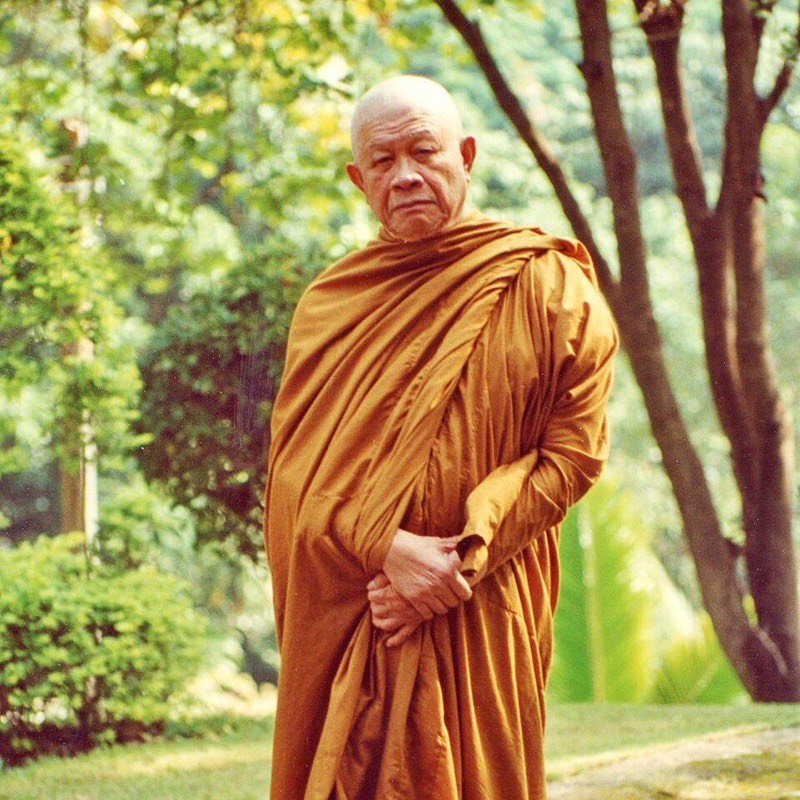
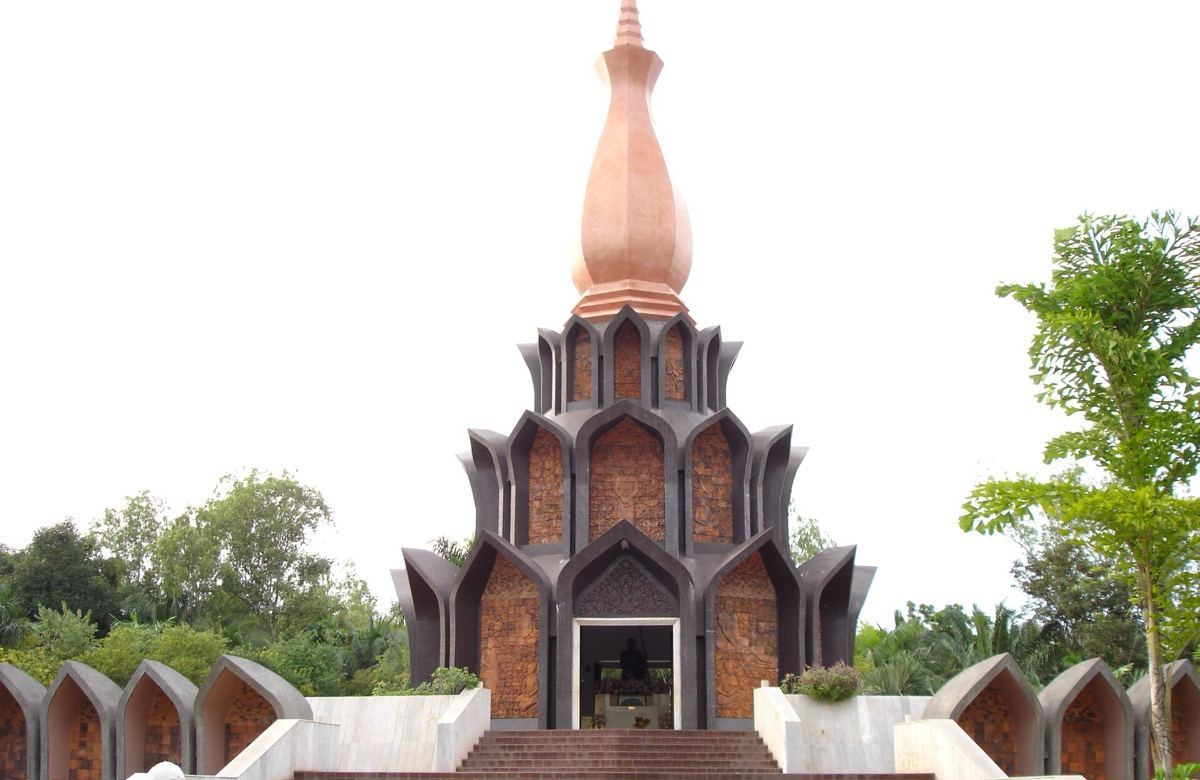
He built Wat Pa Udom Somphon in Phanna Nikhom and the mountain monastery Wat Tham Kham nearby; Ajahn Thate, who later stayed there, describes how the villagers helped him extend the track up the mountain. From 1965 he spent every rains retreat at Wat Pa Udom Somphon, and he died there on 4 January 1977. A chedi museum built at the site of his cremation holds a life-size statue of him, his requisites and his ashes. King Bhumibol, Queen Sirikit and Princess Sirindhorn, who had attended his cremation in January 1978, came back to open it in 1982, according to Matichon. Thai Wikipedia lists among his students Amphon Ambaro, later Supreme Patriarch of Thailand, and Ajahn Suwat Suvaco.
Thai Wikipedia quotes a teaching of his: everyone must one day fight the great battle with death, each alone, and the only weapon is mindfulness (sati), which is built only through meditation. Little of his teaching is published in English. Ajahn Maha Bua’s biography of Ajahn Mun, free from Wat Pa Baan Taad, is the best English source on the monks around Ajahn Mun.
Lineage
teacher to student
Luang Pu Fan Ajaro
Thai Forest (Kammaṭṭhāna), Dhammayut · d. 1977
Fellow students: also studied with Ajahn Mun Bhuridatta · 11
Places
1
Read more
Sources and verification
5
Written from published sources by the volunteer editors. Not yet reviewed by an outside advisor.
- BookAjahn Maha Bua. Venerable Ãcariya Mun Bhūridatta Thera: A Spiritual Biography, tr. Bhikkhu Dick Sīlaratano (Forest Dhamma Books, Baan Taad Forest Monastery, 2005), ch. 1 and note 4 to pp. 42-56 (Ajahn Fan Ajaro, 1898-1977: met Ajahn Mun in 1920 near his home village; followed him to Ubon in 1926 and helped establish forest monasteries; settled in his home district; Maha Bua's description of his loving kindness)
- BookAjahn Thate. The Autobiography of a Forest Monk, tr. Bhikkhu Ariyesako (1996): Ajahn Fan's monastery at Tham Kham and the track the villagers built up the mountain; appendix B (royal opening of his chedi and museum)
- ReferenceMatichon: 'Luang Pu Fan Ajaro, the teacher overflowing with loving kindness' (17 June 2021), drawing on the Luang Pu Fan Ajaro Foundation's book (born 20 August 1899; met Ajahn Mun in 1920; Dhammayut 21 May 1925; rains retreats at Wat Pa Udom Somphon 1965-1976; died there 4 January 1977; royal cremation 21 January 1978; King Bhumibol, Queen Sirikit and Princess Sirindhorn opened the chedi museum in BE 2525)
- ReferenceThai Wikipedia: Luang Pu Fan Ajaro (born 20 August 1899 at Ban Muang Khai, Phanna Nikhom; novice in the Mahanikaya; ordained at twenty; Dhammayut 21 May 1925; died 4 January 1977 at Wat Pa Udom Somphon; cremation 21 January 1978; chedi museum with statue and requisites; disciples)
- ReferenceMy Sakon Nakhon: Wat Pa Udom Somphon (built the monastery and Wat Tham Kham; died there in 1977; museum with his ashes)
Portrait by unknown author, 1972 (Wikimedia Commons, public domain)
Something wrong, missing or out of date? Report a problem. A source we can check makes it quicker to fix.