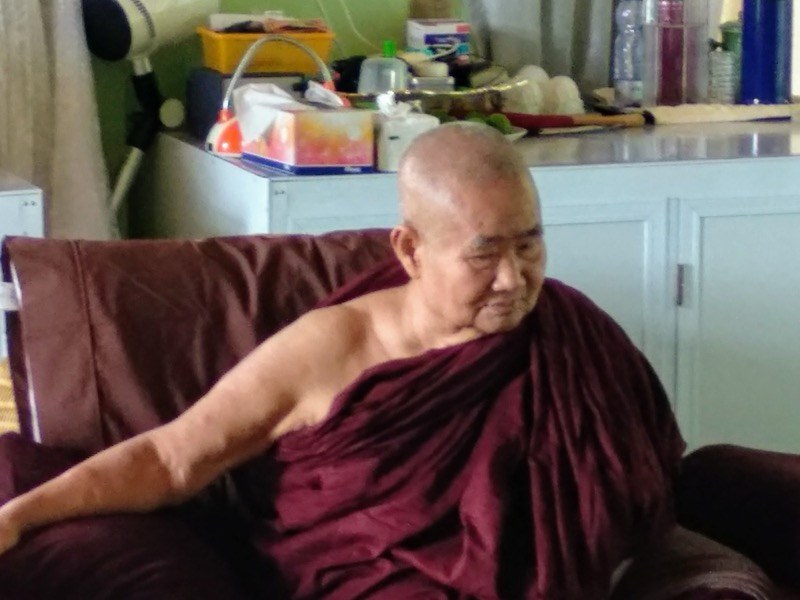
Pa-Auk Tawya Sayadaw, whose monastic name is Bhaddanta Āciṇṇa, was born in 1934. He was ordained a novice at ten and a bhikkhu at twenty. He studied the Pāli texts and passed the Dhammacariya examinations at twenty-two, which the monastery likens to a degree in Pāli studies.
In 1964 he intensified his meditation and began to live as a forest monk. He kept studying the texts while seeking instruction from respected meditation teachers. In 1981 he became abbot of Pa-Auk Forest Monastery, at the invitation of the previous abbot, Venerable Aggapañña. The monastery stands in forest 15 kilometres south-east of Mawlamyine in Mon State, Myanmar, and was founded in 1926. Monks and laypeople have come to practise under him since 1983, and foreign meditators began arriving in the early 1990s. The monastery now heads a group of more than forty branches and associated centres, in Myanmar and abroad.
The method taught there is based on the Tipiṭaka and its commentaries, arranged as the threefold training of ethics, concentration and wisdom. In outline, a meditator first develops samatha, usually absorption (jhāna) through mindfulness of breathing, though any of the forty subjects may be used. Someone who prefers to skip jhāna is taught four-elements meditation to reach access concentration instead. Four protective meditations follow: loving-kindness, recollection of the Buddha, the repulsiveness of the body and recollection of death. The meditator then examines mind and matter, and the workings of dependent origination, before turning to the three characteristics in vipassanā. The monastery describes this as a step-by-step formula in seven stages of purification.
In 1997 he published a five-volume work, The Practice that Leads to Nibbāna, which the monastery says exists only in Burmese and Sinhalese. Shorter English books include Knowing and Seeing and The Workings of Kamma, listed on the monastery’s sites. He speaks English and has led retreats in Asia, Europe and the United States. The government of Myanmar gave him the title Agga Mahā Kammaṭṭhānācariya in 1999.
Anyone planning a stay should read the monastery’s own pages first. Foreign meditators need approval before they come.
Read more
Sources and verification
4
Written from published sources by the volunteer editors. Not yet reviewed by an outside advisor.
- OrganisationPa-Auk Forest Monastery: About Us (founded 1926, location, born 1934, ordination, 1964 forest practice, abbot from 1981, foreign meditators from the early 1990s, 1997 work, titles 1999 and 2009, lecture travels)
- OrganisationPa-Auk Forest Monastery: Meditation (threefold training, samatha then vipassanā, jhāna, four-elements alternative, four protective meditations, dependent origination)
- Organisationpaauk.org: information site (monastery founded in 1926 by Thit-thee Sayadaw; 2002 US visit; Knowing and Seeing and The Workings of Kamma listed)
- OrganisationPa-Auk Forest Monastery: eBooks (books by the Pa-Auk Tawya Sayadaw)
Portrait by Paingpeace (Wikimedia Commons, CC BY-SA 4.0)
Something wrong, missing or out of date? Report a problem. A source we can check makes it quicker to fix.