- Kind
- Pilgrimage Site
- Founded
- 3rd century BCE (first temple)
- Town
- Bodh Gaya
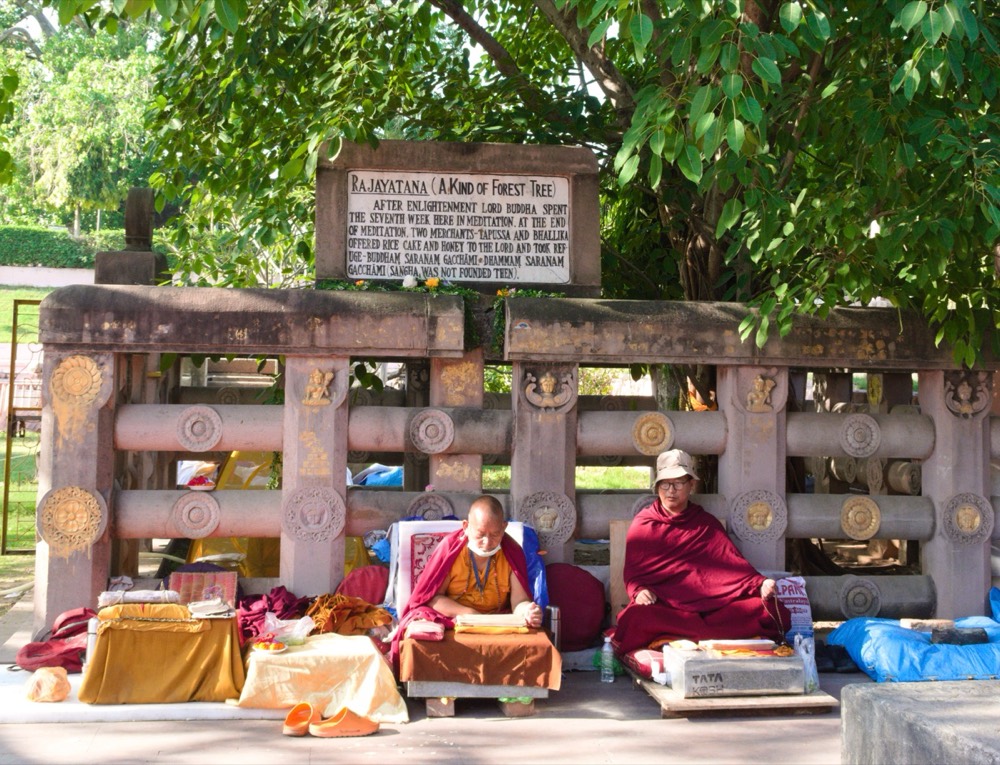
Photo by Rohit Sharma (Wikimedia Commons, CC BY-SA 4.0). Buddhist monks at the Mahabodhi Temple
Bodh Gaya, in Bihar, is where tradition places Siddhārtha Gautama’s awakening beneath a pipal tree (Ficus religiosa). In the Mahāparinibbāna Sutta (DN 16) the Buddha tells Ānanda of four places a person of faith should visit, among them the place where “the Tathagata became fully enlightened”; the translators identify that place as Buddha-Gaya. UNESCO describes the temple complex as the holiest place of Buddhist pilgrimage in the world.
The Mahabodhi Temple Complex marks the site. UNESCO says the Emperor Asoka built the first temple there in the 3rd century BCE, together with balustrades and a memorial column, and that the present temple, about 50 metres high, dates from the 5th or 6th century CE. It is one of the earliest Buddhist temples built entirely in brick still standing from the late Gupta period. Beside it is the Vajrasana, a polished sandstone platform marking where the Buddha sat, and a few of the original carved sandstone balustrade pillars remain in place.
The Bodhi tree west of the temple is, in UNESCO’s words, a supposed direct descendant of the original. Wikipedia says the present tree was grown from a sapling of the Sri Maha Bodhi in Sri Lanka, itself said to have been grown from the original. The complex also marks the places associated with the seven weeks the Buddha spent here after the awakening.
Around the temple, people from Tibet, Bhutan, Myanmar, Thailand, Japan, Vietnam, Sri Lanka and many other countries have built temples and monasteries, according to Wikipedia.
Visiting
The temple is open every day; the temple committee's website gives the current timings and puja schedule. Check its guidance before you go.
Related places
1
Read more
Sources and verification
4
Written from published sources by the volunteer editors. Not yet reviewed by an outside advisor.
- ArchiveUNESCO World Heritage Centre: Mahabodhi Temple Complex at Bodh Gaya (first temple by Asoka in the 3rd century BCE; present temple 5th-6th century, built entirely in brick; Vajrasana, sandstone balustrade, Bodhi tree as a supposed direct descendant; holiest place of Buddhist pilgrimage; inscribed 2002)
- CanonicalMahāparinibbāna Sutta (DN 16) 5.16-21, tr. Sister Vajira and Francis Story (Access to Insight), with the translators' note 44 identifying the place of awakening as Buddha-Gaya
- ReferenceWikipedia: Bodh Gaya (Bodhi tree grown from a sapling of the Sri Maha Bodhi; monasteries built by people of many countries)
- OrganisationBodhgaya Temple Management Committee: official site (open every day; timings)
Something wrong, missing or out of date? Report a problem. A source we can check makes it quicker to fix.