- Kind
- Pilgrimage Site
- Town
- Lumbini
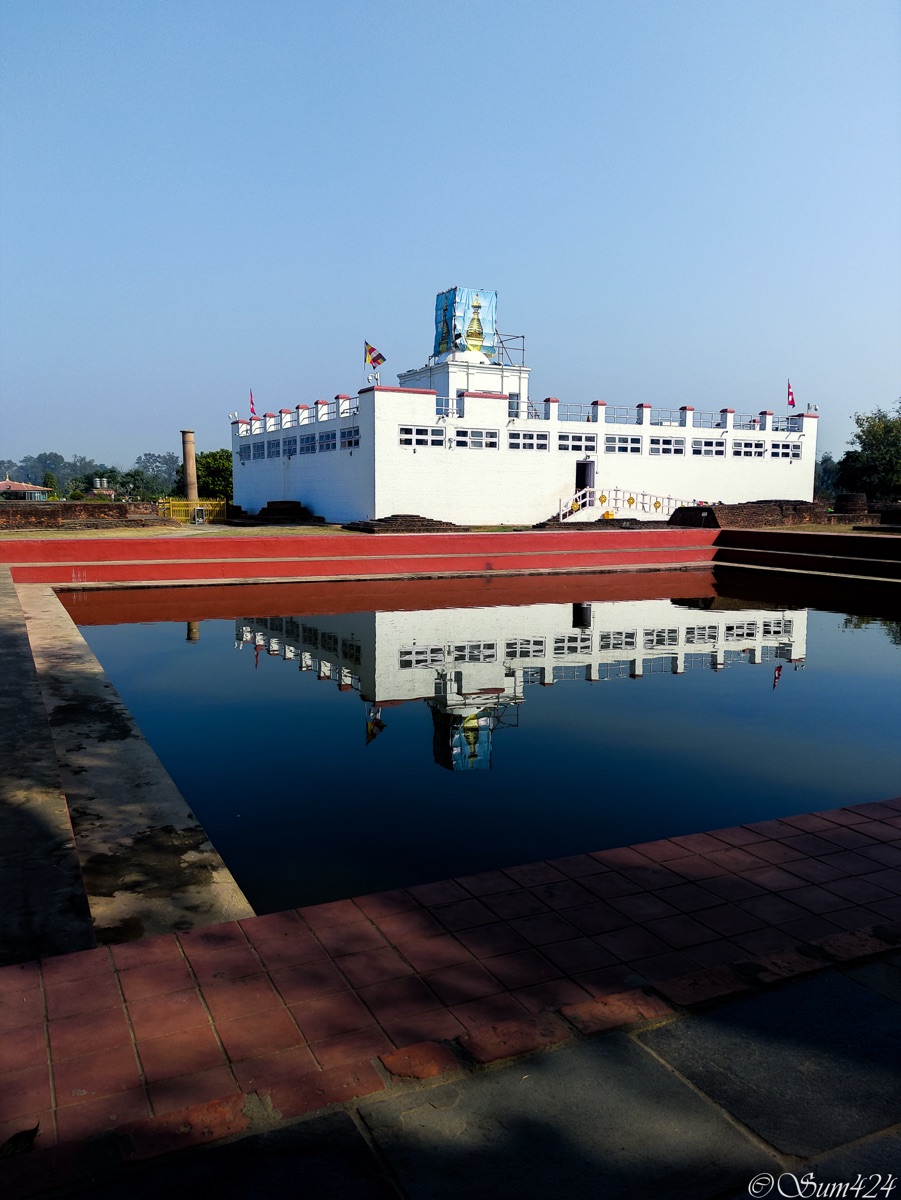
Photo by Sum424 (Wikimedia Commons, CC BY-SA 4.0). Mayadevi Temple, Lumbini
Lumbini, in the Terai plains of southern Nepal, is where Buddhist tradition places the birth of Siddhārtha Gautama. In the Mahāparinibbāna Sutta (DN 16) the Buddha names four places for pilgrims, the first being the place where “the Tathagata was born”; the translators identify it as Lumbini, near Kapilavatthu.
The sacred garden holds the Maya Devi Temple and the sandstone pillar that the Mauryan emperor Asoka set up in 249 BCE. Its inscription, in Brahmi script, records that the king came and worshipped there “because the Buddha Shakyamuni was born here”, set up the pillar to show that “the Blessed One was born here”, and made the village of Lumbini free of taxes, paying only an eighth share of its produce, in the translation Wikipedia gives. UNESCO calls the pillar the evidence for the site’s identification. The pillar was found in 1896.
Within the Maya Devi Temple, UNESCO describes brick structures from the 3rd century BCE onwards. Excavations reported in 2013 by Robin Coningham and Kosh Prasad Acharya found a pre-Ashokan brick shrine built over an earlier timber one. Coningham suggests the timber structure may be a Buddhist shrine of the 6th century BCE; Wikipedia notes that other scholars say the finds show only that the site predates the Buddha.
The wider area follows a master plan drawn up by the architect Kenzo Tange between 1972 and 1978. Its monastic zone is divided by a long canal, with Theravada monasteries on the eastern side and Mahayana and Vajrayana monasteries on the western side.
Visiting
The sacred garden is a working pilgrimage site managed by the Lumbini Development Trust. Check current arrangements locally before you go.
Related places
1
Read more
Sources and verification
4
Written from published sources by the volunteer editors. Not yet reviewed by an outside advisor.
- ArchiveUNESCO World Heritage Centre: Lumbini, the Birthplace of the Lord Buddha (Terai plains; Asoka pillar of 249 BCE with its inscription; Maya Devi Temple remains from the 3rd century BCE; Kenzo Tange master plan 1972-1978; inscribed 1997)
- ArchiveUNESCO World Heritage Centre news, 7 July 2013: 'Earliest Buddhist shrines in South Asia discovered in Lumbini' (pre-Ashokan brick temple over an earlier timber one; Coningham and Acharya)
- CanonicalMahāparinibbāna Sutta (DN 16) 5.16-21, tr. Sister Vajira and Francis Story (Access to Insight), with the translators' note 43 identifying the birthplace as Lumbini
- ReferenceWikipedia: Lumbini (inscription translation and tax exemption; pillar found in 1896; Coningham's dating and the scholarly dissent; eastern Theravada and western Mahayana and Vajrayana monastic zones)
Something wrong, missing or out of date? Report a problem. A source we can check makes it quicker to fix.