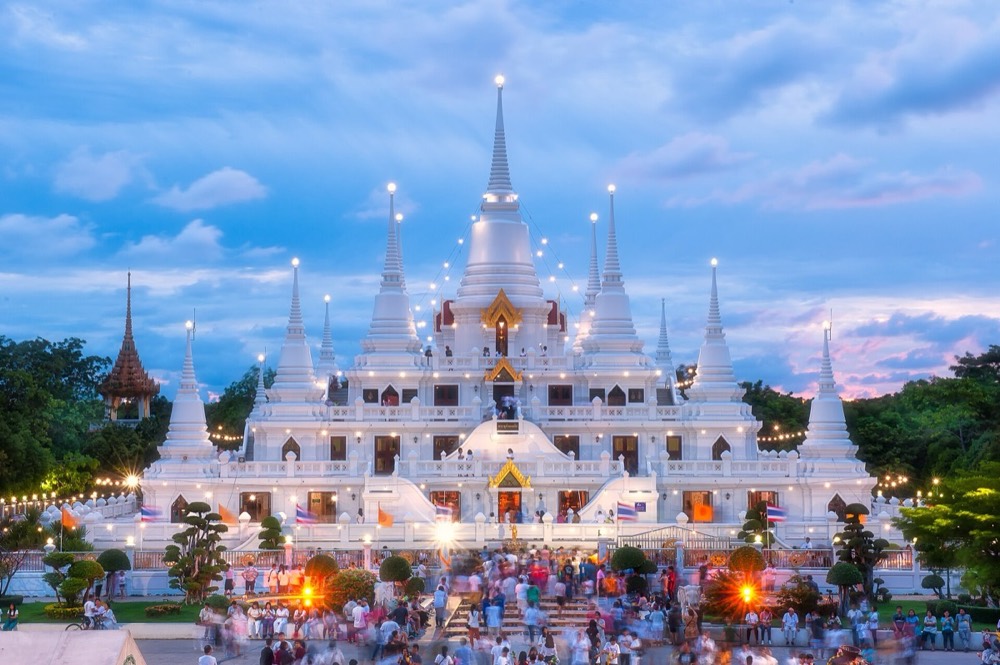
- Kind
- Monastery
- Tradition
- Theravada
- Founded
- 1955
- Town
- Mueang Samut Prakan
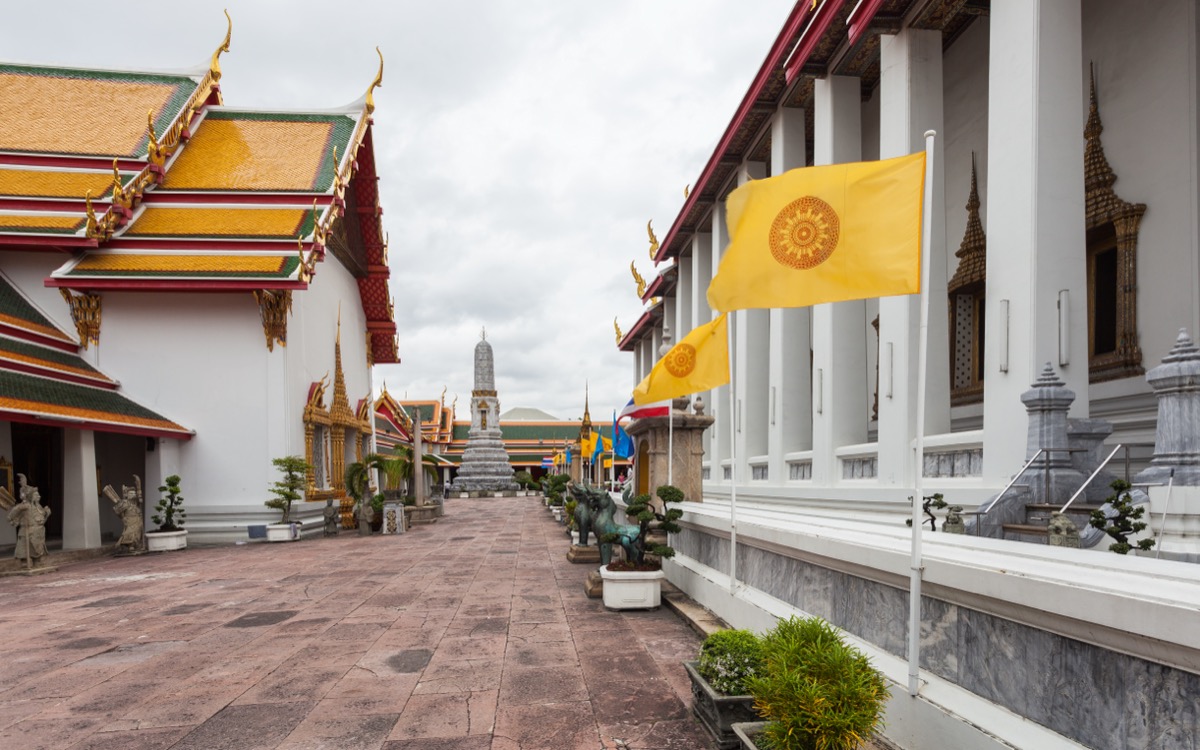
Photo by Preecha.MJ (Wikimedia Commons, CC BY-SA 4.0). The stupa complex
Wat Asokaram stands on the outskirts of Bangkok in Samut Prakan province, close to the mouth of the Chao Phraya River. It was founded by Ajahn Lee Dhammadharo, a student of Ajahn Mun, and is the monastery where he spent his last years.
According to the monastery’s own history, the landowners donated about 53 rai of land in 1954, and in 1955 a monastic residence was established there for the first time, with six monks at the start. Ajahn Lee moved in after the royal cremation of the Supreme Patriarch in 1955. He wanted the place to follow the dhutaṅga (ascetic) practices, and he named it after the Emperor Ashoka, a name he first thought of while staying in Sarnath. After his death in 1961 the monastery kept growing. The Dhutanga Chedi, a group of thirteen chedis built to his design, was finished later.
The monastery’s website says that mindfulness of breathing (ānāpānasati) remains its central meditation method, following Ajahn Lee. The grounds also house a community of nuns and women lay practitioners. Ajahn Fuang Jotiko, who taught Thanissaro Bhikkhu, stayed on here after Ajahn Lee’s death and left in 1965.
The monastery works in Thai. Its website has English pages on its history and how to contact it, but describes no retreat for foreigners, so write before you travel if you hope to stay. For Ajahn Lee’s teaching in English, Thanissaro Bhikkhu’s free translations on dhammatalks.org are the place to start.
Visiting
The monastery works in Thai and its website does not describe a programme for foreign meditators. Contact the monastery using the details on its website before planning a visit or a stay.
Teachers
2
Related places
4
Nearby
within 150 km, straight line
Read more
Sources and verification
4
Written from published sources by the volunteer editors. Not yet reviewed by an outside advisor.
- OrganisationWat Asokaram: History of Wat Asokaram
- BookAjaan Lee Dhammadharo (trans. Thanissaro Bhikkhu). Frames of Reference, Foreword: About the Author
- OrganisationWat Asokaram: contact page and main site
- BookThanissaro Bhikkhu, Awareness Itself: The Teachings of Ajahn Fuang Jotiko, Introduction (Ajahn Fuang expected to become abbot after Ajahn Lee's death; left for Wat Makut in 1965)
Something wrong, missing or out of date? Report a problem. A source we can check makes it quicker to fix.