- Kind
- Monastery
- Tradition
- Theravada
- Town
- Bang Kruai
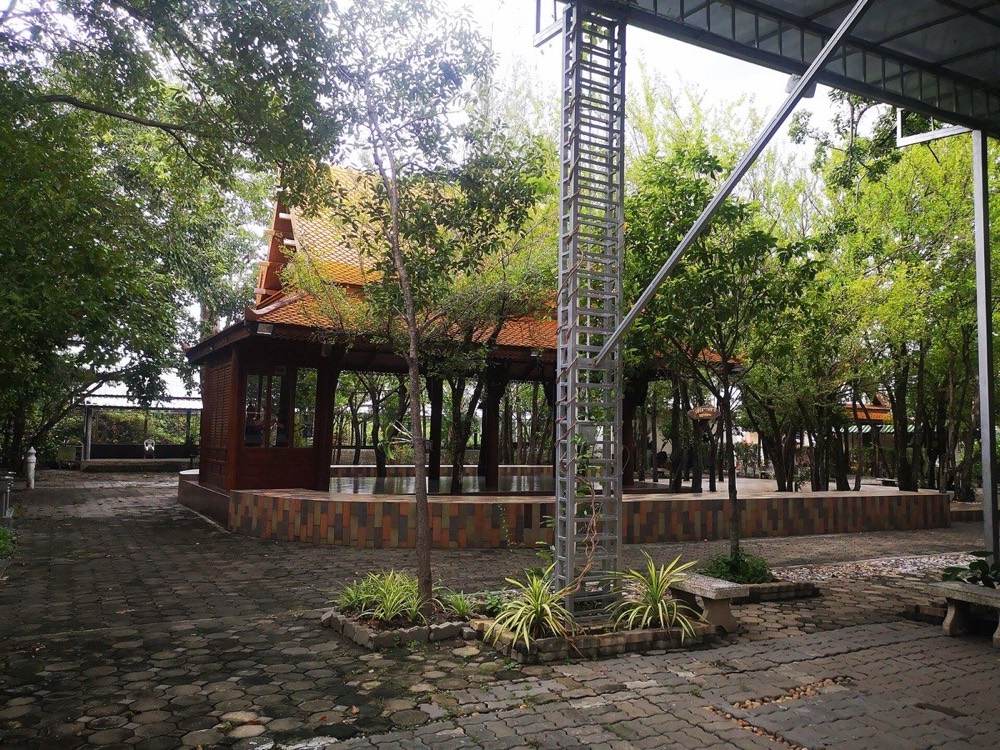
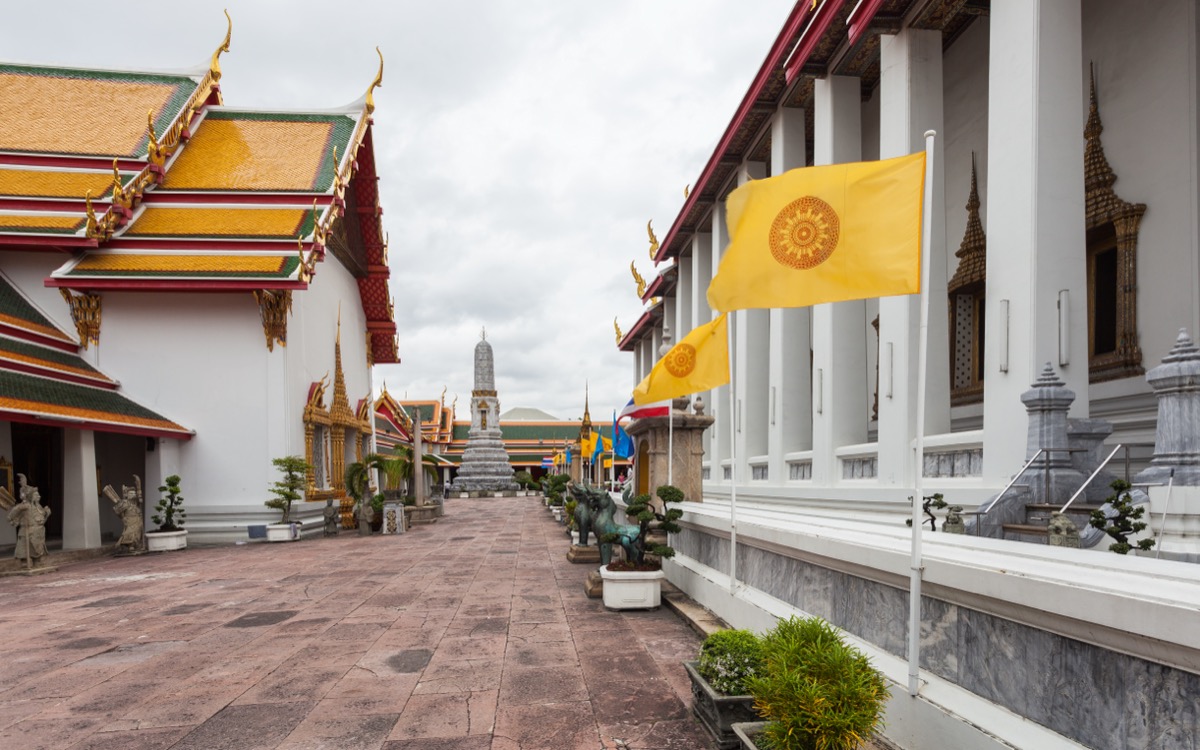
Photo by Dharmadana (Wikimedia Commons, CC BY-SA 4.0). A pavilion in the grounds
Wat Sanamnai is a temple in Bang Kruai district, Nonthaburi, on the edge of Bangkok. It is known among practitioners for the method of Luang Por Teean Cittasubho, in which mindfulness is developed through awareness of movement, above all a sequence of slow hand movements.
According to Thai Wikipedia, nobody knows who built the temple or when. It had stood empty, without monks, for a long time, with only the remains of an old ordination hall and stupa, and most of its land taken over for farming. In the mid-1970s two supporters introduced it to Luang Por Teean, who was then staying at Wat Chonprathan Rangsarit and looking for a place to teach meditation without putting up buildings. He liked the site and restored it as a temple. Phra Paisal Visalo, who first went there in 1975 as a student, recalls it as a former abandoned temple that Luang Por Teean and his students had only just revived as a practice centre.
Thai Wikipedia describes grounds of 80 by 160 metres beside the railway, planted with large trees and natural ponds, and kept deliberately plain. There is a monks’ area at the back with walking paths cut like paddy fields, a front area for laymen and monks with a hall, an open-air practice hall and a library, and a separate area for women with a sand walking court under tall trees.
For a foreign visitor this is a Thai-language place. The temple’s site is in Thai, with a Chinese-language version that includes rules for practitioners and a list of meditation centres abroad. No English visitor guidance is published. The practice itself starts with the movements described on the Luang Por Teean page. If you plan to visit, check the temple’s site first.
Visiting
A working temple on the edge of Bangkok. Its own site is in Thai, with a separate Chinese-language version that has a page of rules for practitioners; no English guidance for visitors is published. Dress modestly, cover shoulders and knees, and ask at the temple before turning up to practise. Check the temple's site for current programmes.
Teachers
1
Related places
2
Nearby
within 150 km, straight line
Read more
Sources and verification
3
Written from published sources by the volunteer editors. Not yet reviewed by an outside advisor.
- OrganisationWat Sanamnai: home page (developing mindfulness in Luang Por Teean's way; Bang Kruai, Nonthaburi)
- ReferenceThai Wikipedia: Wat Sanamnai (abandoned temple of unknown origin; recommended to Luang Por Teean in 1976; movement-based practice; 80 by 160 m grounds in three areas)
- BookPhra Paisal Visalo, Luang Por Teean Cittasubho, Pacharayasan, July 2008 (the temple had just been revived by Luang Por Teean and his students in 1975)
Something wrong, missing or out of date? Report a problem. A source we can check makes it quicker to fix.