- Kind
- Cave
- Tradition
- Tibetan
- Founded
- late 8th century (tradition)
- Town
- Pharping
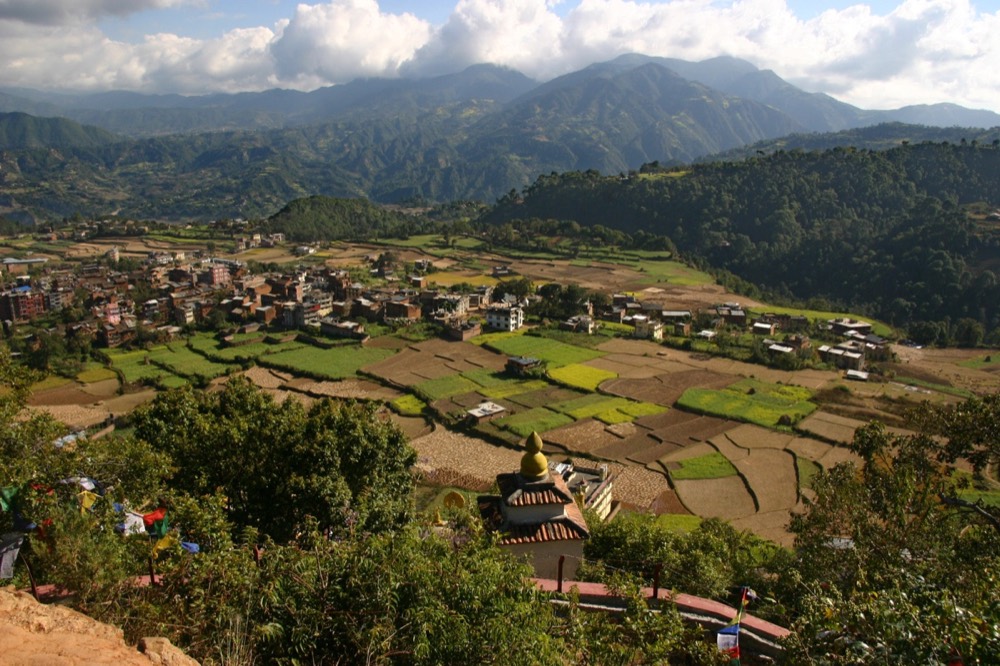
Photo by Gerd Eichmann (Wikimedia Commons, CC BY-SA 4.0). Pharping landscape, near the Asura Cave
Asura Cave sits above the village of Pharping, about 16 km south-west of Kathmandu. Nyingma tradition, as Nekhor’s pilgrimage guide gives it, says Padmasambhava (Guru Rinpoche) practised in two caves here: the sunny upper Asura Cave in the winter months and the lower Yangleshö cave in the hot summer months. At the Asura Cave, by combining the practices of Yangdak Heruka and Vajrakīlaya, he is held to have attained mahāmudrā, the Great Seal. The Le’u Dunma, the Prayer in Seven Chapters, links Yangleshö with the same accomplishment.
The association is old. Jacob Dalton’s Treasury of Lives biography notes that one of the earliest manuscripts about Padmasambhava, a tenth-century text found at Dunhuang (Pelliot tibétain 44), describes him gathering the texts and performing the rites of the Vajrakīlāya tantra at the Asura cave in Yanglesho, before his journey to Tibet in the late eighth century.
Pharping is full of places of practice. Nekhor records that Tulku Urgyen Rinpoche built a monastery and retreat centre at the Asura Cave at the request of the 16th Karmapa, in use since the early 1980s, and that Chatral Rinpoche’s monastery stands beside the Yangleshö cave. Nearby, a small temple protects two rock images of Tara held to be self-arisen.
Visiting
Steps climb from Pharping village, about 16 km south-west of Kathmandu, past several monasteries to the cave. It is an active place of pilgrimage and retreat, so keep quiet and follow the custodians' guidance.
Related places
3
Read more
Sources and verification
3
Written from published sources by the volunteer editors. Not yet reviewed by an outside advisor.
- ArchiveTreasury of Lives: Padmasambhava, by Jacob Dalton (late 8th century; Pelliot tibétain 44 places his Vajrakīlāya rites at the Asura cave in Yanglesho, Nepal)
- OrganisationNekhor: Asura and Yangleshö Caves (upper and lower caves; winter and summer; Yangdak Heruka and Vajrakilaya, mahāmudrā; Le'u Dunma verse; Tulku Urgyen Rinpoche's monastery and retreat centre at Asura Cave; Chatral Rinpoche's monastery beside Yangleshö; self-arisen Tara images; 16 km from Kathmandu)
- ReferenceWikipedia: Pharping
Something wrong, missing or out of date? Report a problem. A source we can check makes it quicker to fix.