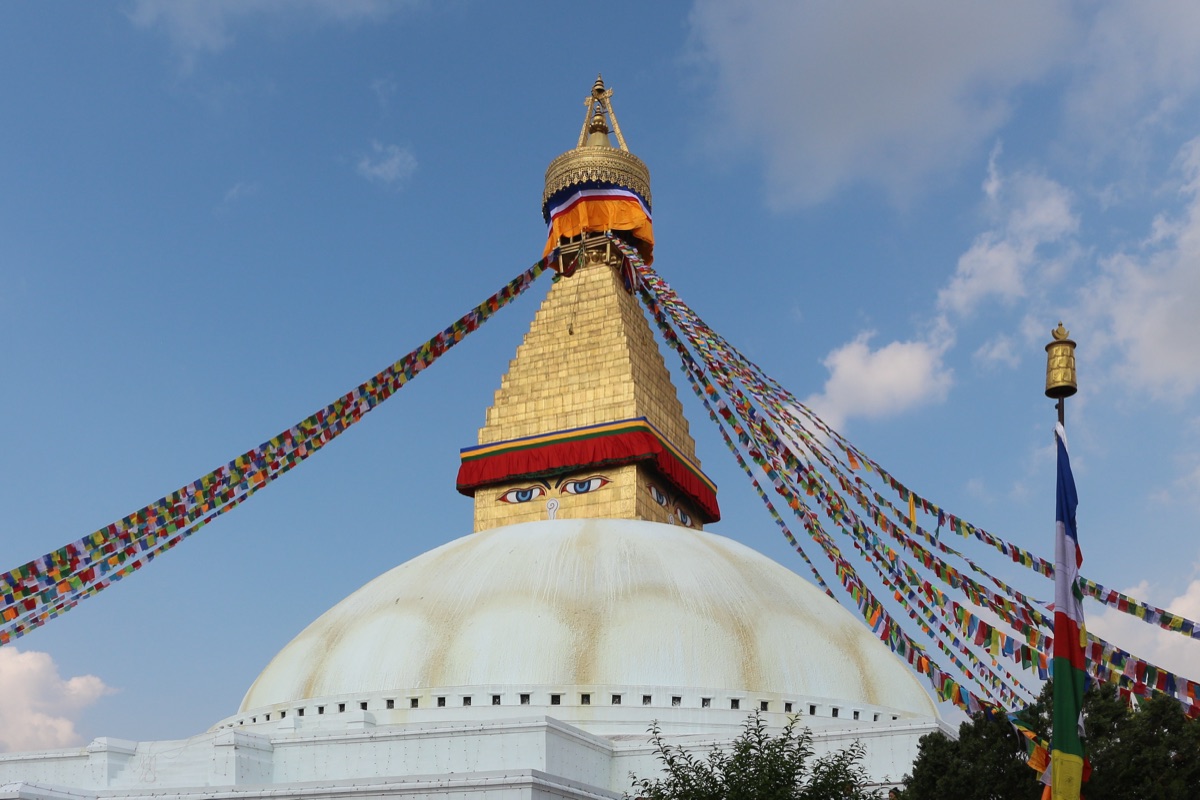
- Kind
- Stupa
- Tradition
- Tibetan
- Founded
- present structure probably 14th century
- Town
- Kathmandu
Photo by Bernard Gagnon (Wikimedia Commons, CC BY-SA 4.0)
The Boudha Stupa (Tibetan Jarung Kashor, Wylie bya rung ka shor; Newari Khasti Chaitya) stands in Boudha, in north-east Kathmandu. Wikipedia describes it as the largest spherical stupa in Nepal and one of the largest in the world, laid out as a great mandala. The present structure was most likely built in the 14th century, though Newar chronicles mention a stupa here as early as the 5th century. It has been a UNESCO World Heritage Site, as part of the Kathmandu Valley listing, since 1979.
A Tibetan legend gives the stupa its Tibetan name. A poultry farmer named Samvari asked the king for land to build a great stupa; he replied “Jarung” (“let it be done”), and when his court objected he explained that the words had “slipped from his tongue” (kashor). The relics enshrined in it are held to include bone fragments of the Buddhas Kassapa and Shakyamuni.
Tibetan merchants prayed at the stupa for centuries. After the 1959 Tibetan uprising many refugees settled around it, and more than fifty gompas and monasteries have since been built in the neighbourhood. When the stupa was reopened in 2016 after earthquake repairs, representatives of the Kagyu, Sakya, Gelug and Nyingma traditions performed its consecration. Ka-Nying Shedrub Ling, the monastery of Tulku Urgyen Rinpoche’s family, stands just north of it.
Visiting
The kora, the path around the stupa, is walked clockwise. The surrounding monasteries set their own visiting arrangements, so ask at each one.
Related places
2
Nearby
within 150 km, straight line
Read more
Sources and verification
1
Written from published sources by the volunteer editors. Not yet reviewed by an outside advisor.
Something wrong, missing or out of date? Report a problem. A source we can check makes it quicker to fix.